
Managing combination skin often feels like tackling two different skin types at once — an oily T-zone and dry, tight cheeks. In this guide, I break down how I approach balancing hydration and oil control with a simple, targeted morning routine.

Looking in the mirror with combination skin can feel like assessing two different climates on one face. A stubborn, greasy shine radiates across the forehead, nose, and chin, while the cheeks stay dry, tight, and prone to flaking. In my experience researching this topic, that dual profile is one of the more frustrating skin types to shop for — the skincare aisle rarely makes it simple.
Treating the whole face the same way tends to backfire. An aggressive, oil-stripping toner applied everywhere to control a shiny nose can strip the moisture barrier on the cheeks, leading to redness. On the flip side, a heavy, emollient cream applied evenly can suffocate the T-zone and contribute to congestion and breakouts.
The approach I recommend instead is zone-specific: treat the T-zone and the cheeks differently within the same routine, rather than picking one blanket product for the whole face. Below is the morning routine and the specific actives I'd point to for each zone.
The Zoning Blueprint: Step-by-Step Morning Routine
🎯 The Master Rule: "Zone" Your Application
My core recommendation for combination skin is skipping full-face blanket applications. Apply active formulas selectively — oil-controlling ingredients where sebum glands are concentrated, and moisture-binding layers where the skin tends to run dry.
- The Strategic Cleanse: Wash with a mild, non-foaming gel cleanser and lukewarm water. I focus the massaging motion on the forehead, nose, and chin to clear overnight sebum, while lightly passing over the cheeks to avoid stripping lipids there.
- The Hydration Prime: While skin is still slightly damp, pat an oil-free, humectant-dense essence or watery toner across the entire face. This step adds water to the skin without adding heavy, pore-clogging ingredients to oil-prone areas.
- T-Zone Balancing Act: I'd apply a couple of drops of a 10% Niacinamide serum directly to the forehead, down the nose, and onto the chin. Niacinamide is well-studied for helping regulate oil production and minimize the look of enlarged pores in this area.
- Cheek Boundary Lock: Take a small, dime-sized amount of a lightweight, ceramide-rich water gel and press it into the lower cheeks, jawline, and outer contours to lock in moisture and reduce flaking through the day.
- The Zero-Shine Shield: Finish with an oil-absorbing, broad-spectrum sunscreen across the entire face. A dry-touch formula gives the cheeks sun protection while keeping the T-zone matte.

- Formulated with 1% Zinc PCA alongside Niacinamide to help manage surface oil and shine.
- Commonly cited for helping minimize the look of enlarged pores and uneven tone.
- Can pill or ball up on the skin if applied over dry, unmoisturized skin.
- The 10% concentration is on the higher end and may cause a purging period for some, especially sensitive skin.
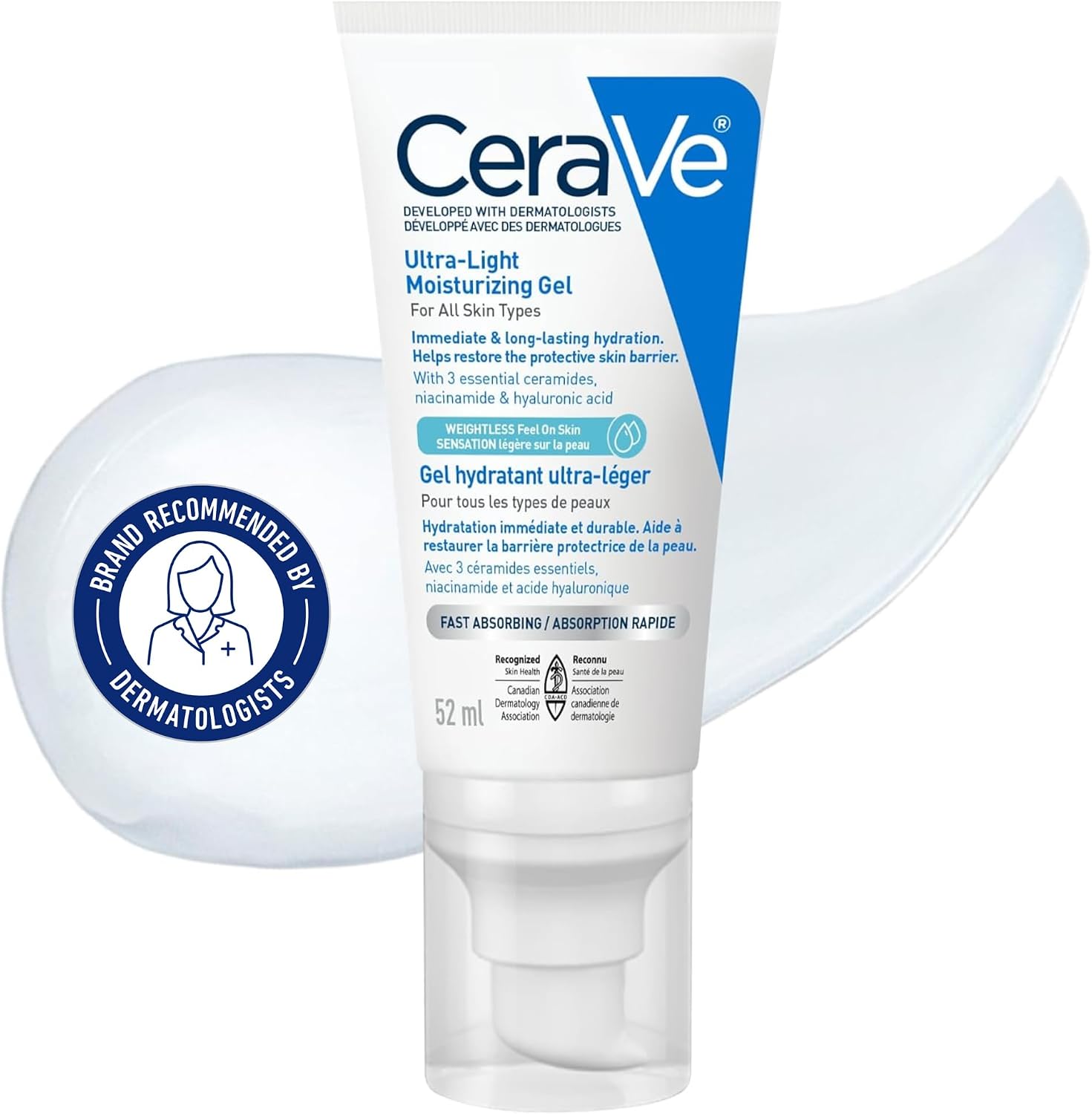
- Contains three essential ceramides to help support the skin barrier.
- Oil-free, water-based gel texture that won't congest the T-zone.
- Fragrance-free and non-comedogenic, developed with dermatologist input.
- May feel too light for very dry cheeks in colder or low-humidity climates.
- The gel texture, while fast-absorbing, offers less richness than a traditional cream.

- Formulated to keep the T-zone matte, even in humid conditions.
- Oil-free and non-comedogenic, with no greasy residue.
- A well-established, widely available option from a reputable dermatological brand.
- The dry-touch finish sets quickly, so it needs fast, even blending.
- Can feel too matte or drying on the cheeks if used without a moisturizer underneath.
Frequently Asked Questions
It's possible to use a richer lotion on the cheeks and a gel on the T-zone, but in my experience it's usually not necessary. A good oil-free water gel, like the one recommended above, tends to hydrate dry areas well enough without congesting the forehead and nose.
From what I've found, Niacinamide is a strong fit for combination skin because it's studied for two relevant benefits at once: helping regulate oil production in the T-zone, and supporting the skin barrier in drier areas like the cheeks.
One theory some dermatologists point to is that dehydrated skin can trigger the sebaceous glands to produce more oil to compensate — though this idea is debated in dermatology, and oil production is also driven by genetics, hormones, and climate. Regardless of the exact cause, keeping skin adequately hydrated is a reasonable, low-risk step for most combination skin routines.
Medical Disclaimer: The product reviews, ingredient comparisons, and routine recommendations outlined here are for general educational and informational purposes only. This content does not substitute for professional dermatological or medical advice.
Because every skin barrier reacts differently to active ingredients, I recommend a localized 24-hour patch test behind the ear or on the inner wrist before introducing a new active to the face, and consulting a certified dermatologist for persistent or inflammatory skin conditions.
Share your experience balancing dry and oily zones in the comments below!