
Pure Vitamin C is highly regarded for fading stubborn dark spots, smoothing fine lines, and revealing a healthy, radiant glow. However, applying a basic Vitamin C serum entirely by itself can limit the skin from reaching its full potential. On its own, pure L-ascorbic acid is chemically volatile and rapidly loses its strength when exposed to light and atmospheric air. To secure maximum stability and multiply its potency, it helps to introduce two essential skincare helpers into a morning routine: Ferulic Acid and Vitamin E. Published dermatology research found that Vitamin C and E alone provided roughly 4-fold photoprotection against UV-related skin damage, and adding ferulic acid to that same solution increased it to roughly 8-fold (source). This guide breaks down exactly how this cellular synergy operates and how to select an ideal blend for your vanity.
The Science Behind the Synergy: Why They Need Each Other
Mixing these specific ingredients is not just a passing trend—it is advanced skincare science that forms a highly supportive, self-recycling cellular circle:
- Double the Shielding Action: Vitamin C guards the watery layers of skin cells, while Vitamin E protects the oily lipid layers. Together, they form a complete, top-to-bottom defensive network.
- The Recycling Loop: When Vitamin E neutralizes a free radical from pollution, it becomes chemically spent. Vitamin C stepping into the matrix actively recycles that Vitamin E, restoring it to full defensive operation.
- The Ultimate Anchor: Ferulic acid is a plant-based helper that locks the delicate structures of both Vitamin C and E in place, extending a bottle's shelf life for months.
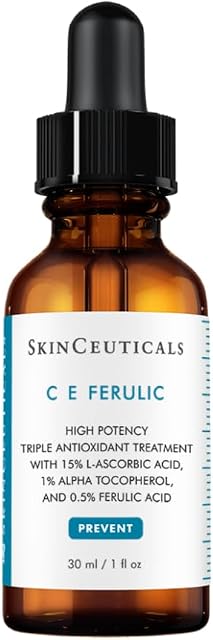
- Features the patented clinical ratio of 15% pure Vitamin C, 1% Vitamin E, and 0.5% Ferulic Acid.
- The brand cites research suggesting the antioxidant protection remains active for up to 72 hours after application.
- Reviewers frequently cite improvement in the appearance of uneven skin tone and post-acne discoloration.
- Requires a much higher initial financial entry investment.
- The authentic raw ferulic acid carries a distinct, sharp clinical scent.
- Mixing the formula at home is intended to help preserve product stability from day one.
- Packed with active pumpkin ferment and fruit enzymes for gentle surface smoothing.
- Formulated without essential oils, silicones, or drying fragrances.
- Requires hands-on setup mixing the active liquids during unboxing.
- Leaves a rich, dewy finish that oily skin types might find heavy.
New to Vitamin C? Start with my Complete Guide to Vitamin C in Skincare for the basics before diving into advanced pairings.
While luxury patented formulas are incredible, they are not the only way to achieve a radiant complexion. Individuals working with a budget, oily pores, or sensitive skin that flushes easily will benefit from a customized formula. Check out the deeply vetted breakdown of the 4 Best Vitamin C Serums (Ranked by Skin Type) to find your perfect morning match!

🛠️ Rules of Application: The Daily Sequence
To optimize Vitamin C performance, follow a direct four-step sequence: Apply carefully to completely clean and dry skin, press four to five drops into the face, wait 60 to 90 seconds to allow for full chemical absorption, and finish by sealing the layers with an independent moisturizer and a broad-spectrum SPF 30+.
⚖️ The Pros and Cons Matrix
| Category | 🧪 CE Ferulic Serums | 🍊 Pure Vit C |
|---|---|---|
| Stability | High (up to 6 months shelf life) | Low (rapid atmospheric oxidation) |
| Pros | 8x environmental protection, hydrated barrier feel | Lower financial entry cost, lightweight fluid layer |
| Cons | Higher initial product cost, tackier surface texture | Can trigger flaking irritation, requires cold refrigeration |
Frequently Asked Questions
Pure Vitamin C is highly unstable and degrades rapidly when exposed to air and light. Adding Vitamin E and Ferulic Acid stabilizes the volatile L-ascorbic acid molecule and, in published research, increased antioxidant protection against environmental skin damage from roughly fourfold to eightfold compared to Vitamin C and E alone (source).
Highly concentrated formulas can cause mild tingling or temporary redness on reactive skin. Individuals with sensitive skin profiles should look for derivatives or lower concentrations and always perform a localized patch test behind the ear before full face application.
A fresh L-ascorbic acid serum should be clear or slightly champagne-colored. If the liquid turns into a distinct dark orange or brown color, oxidation has occurred, meaning the formula has lost its potency and should be replaced.
Medical Disclaimer: The product evaluations, chemical ingredient comparisons, and routine strategies outlined here are intended strictly for general educational and routine-building purposes. This content is written from a place of personal interest in skincare, not professional or clinical expertise, and reflects ingredient research and publicly available reviews rather than firsthand product testing. It does not resemble, substitute, or replace professional dermatological, medical, or clinical healthcare advice.
Because every individual skin barrier profile reacts differently to active cosmetic compounds, performing a localized 24-hour patch test behind the ear or inside the wrist before introducing new active formulas to the face is highly recommended. High-concentration topical Vitamin C can cause localized irritation, tingling, or surface redness. Always consult a certified physician or board-certified dermatologist before introducing active treatments if you experience sensitive skin conditions, rosacea, or active eczema flare-ups.
Product photography mockups and promotional assets featured within this shopping list are sourced from official manufacturer catalogs or accessed via authorized Amazon Associates marketing channels.