
Retinol has more research behind it than almost any other anti-aging ingredient on the market, but that doesn't make shopping for it any easier. Strengths, textures, and price points vary wildly from one bottle to the next, and picking wrong usually means either wasted money or a week of angry, flaky skin. Here's where to start, depending on your skin and your patience level.

In short, retinol speeds up how quickly your skin turns over new cells and nudges collagen production along the way, which is why it's become the ingredient dermatologists reach for first when someone asks about fine lines or uneven texture. If you already read the Vitamin C vs. Retinol breakdown and decided retinol is next up in your routine, here's how to actually pick one.
Quick Comparison
| Product | Strength | Best For |
|---|---|---|
| The Ordinary Retinol 0.5% | 0.5% | First-Time Users |
| RoC Retinol Correxion Night Cream | Stabilized | Deep Lines |
| CeraVe Resurfacing Retinol Serum | Encapsulated | Sensitive Skin |
| Neutrogena Rapid Wrinkle Repair | Retinol SA | Texture & Lines |
| Paula's Choice 1% Retinol | 1% | Experienced Users |
| Celimax Vita-A Retinol Shot | 0.1% | Gentle K-Beauty Pick |
| The Inkey List Starter Retinol | 0.5% | Sensitive/Rosacea-Prone Skin |
How Retinol Actually Works
Retinol is a form of Vitamin A. Once it's on your skin, enzymes convert it into retinoic acid — the form that actually does the work of telling skin cells to turn over faster and ramp up collagen production (source). That conversion step is exactly why retinol tends to be gentler than prescription retinoids like tretinoin, which show up at the skin already active.
The active ingredient is only part of the story, though. What it's mixed with matters almost as much — a retinol paired with ceramides feels completely different on your face than the same percentage in a bare-bones formula, which is why two products with identical label percentages can behave nothing alike in practice.
Picking a Strength Without Overdoing It
More retinol isn't automatically better — it usually just means more redness and regret in week two. If this is your first bottle, stick to 0.25%–0.5% and use it two or three nights a week rather than jumping straight to nightly. Dry or reactive skin tends to do best with encapsulated formulas, which release retinol more slowly instead of dumping it on your face all at once.
If you've been using a lower strength for a while and it's stopped doing much, that's the signal to move up — either to 1%, or to a conversation with a dermatologist about prescription options. Retinol rewards patience more than ambition.
The Lineup
1. The Ordinary Retinol 0.5% in Squalane

This is where most people end up starting, and for good reason. The squalane base cushions the retinol enough that it doesn't feel like you're testing your skin's patience, and the price makes it an easy first bottle to commit to without overthinking it.
✔ Pros: Cheap enough to experiment with, light texture, gentle enough for a first try. ✘ Cons: You'll outgrow it eventually; the jar isn't airless, so it doesn't love sitting open for months.
2. RoC Retinol Correxion Deep Wrinkle Night Cream

Less serum, more cream — this one leans into the "night cream" part of its name, which makes sense if what you're dealing with are lines that have already settled in rather than the early, faint ones. It's the pick for people who tried the lighter stuff and want something with more weight behind it.
✔ Pros: Reviewers consistently mention real improvement on deeper lines; shea butter and squalane keep it from feeling drying. ✘ Cons: Non-negotiable sunscreen commitment; too rich if you're oily.
3. CeraVe Resurfacing Retinol Serum

If your skin has thrown a tantrum every time you've tried retinol before, this is probably the one to try next. The encapsulation technology is basically a slow drip instead of a splash, and pairing it with ceramides and niacinamide means it's working on your barrier at the same time it's working on everything else.
✔ Pros: Genuinely gentle; barrier-friendly ingredients baked in; fragrance-free. ✘ Cons: Slower to show results; CeraVe won't say what percentage you're actually getting.
4. Neutrogena Rapid Wrinkle Repair Serum

The one you can actually grab at a regular drugstore run, which counts for something. It sits in a comfortable middle ground — stronger than a beginner formula, easier to find than the niche stuff — and the hyaluronic acid means it's not fighting you on hydration while the retinol does its thing.
✔ Pros: Actually available everywhere; hydration built in so it's less drying. ✘ Cons: Has a scent some people notice right away; percentage isn't disclosed.
5. Paula's Choice 1% Retinol Treatment

The strongest thing on this list, and not a place to start. This is what you graduate to once the lower percentages stop impressing you — a full 1%, backed up with peptides and antioxidants so your skin has some support while it adjusts to the jump.
✔ Pros: Real strength for people who've earned it; peptides and antioxidants along for the ride. ✘ Cons: Not for beginners, full stop; costs more than the drugstore options here.
6. Celimax The Vita-A Retinol Shot Tightening Serum
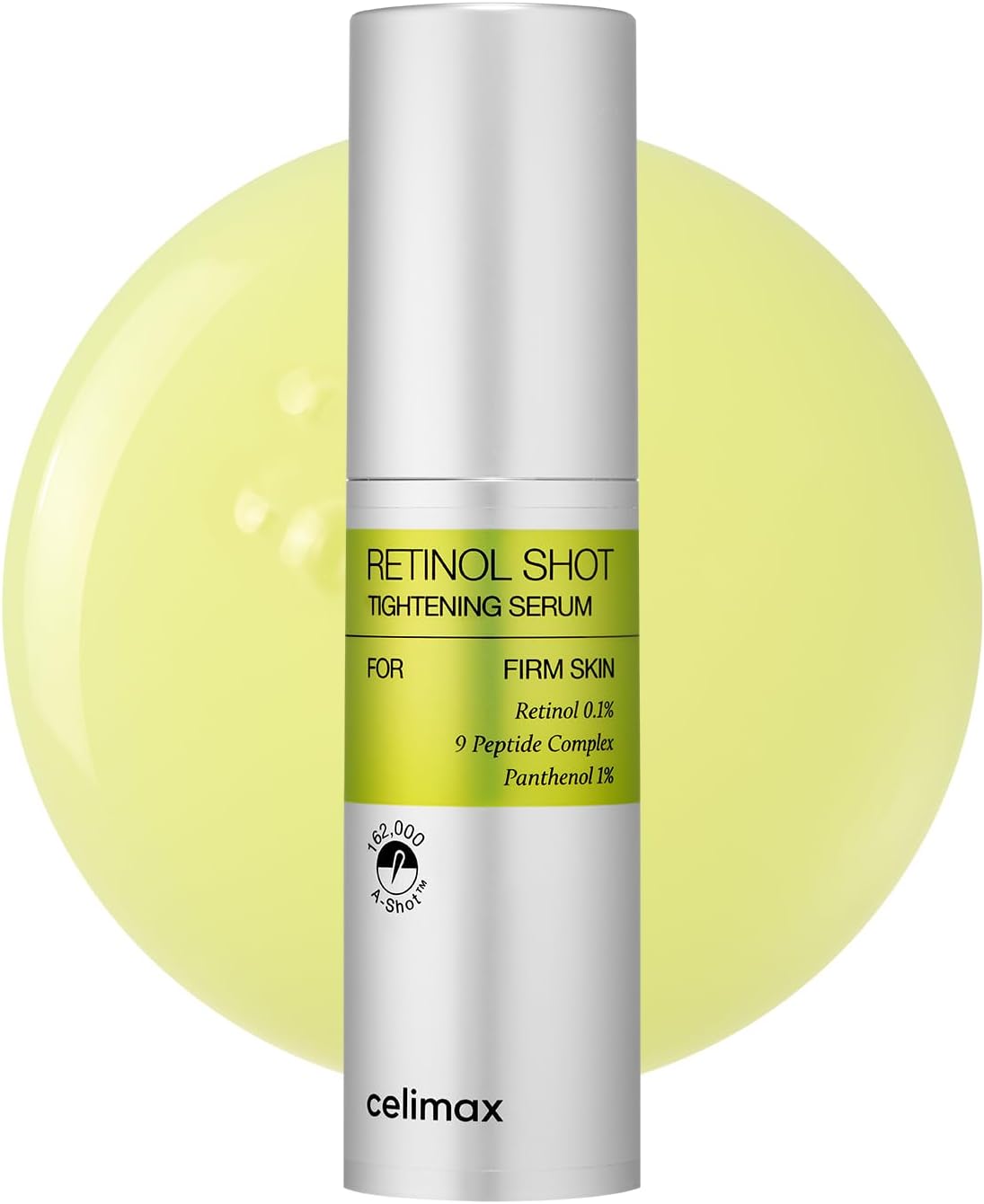
A K-beauty pick that's picked up real momentum lately. It uses 0.1% pure retinol — not a derivative — paired with a nine-peptide complex and a micro-particle delivery system designed to help the actives absorb more evenly, which keeps things gentler than the percentage alone might suggest.
✔ Pros: Pure retinol at a beginner-friendly concentration, peptides for extra support, panthenol included to help soothe as it works. ✘ Cons: Newer to the U.S. market, so it can be harder to find in-stock; pricier than the drugstore options here.
7. The Inkey List Starter Dual Retinol Serum

A well-known, widely trusted UK skincare brand's take on a true beginner formula. It pairs a gentle 0.5% dual-retinol complex with barrier-supporting ingredients, specifically positioned for first-time users and those with sensitive or rosacea-prone skin.
✔ Pros: Purpose-built for beginners and reactive skin, clinically claimed to show visible smoothing within 7 days, barrier-supporting ingredients included alongside the retinol. ✘ Cons: The gentle formulation means it's not a fit for anyone chasing faster, stronger results — you'll eventually outgrow it, same as The Ordinary.
Getting Started Without Wrecking Your Skin
Almost everyone gets some dryness or flaking in the first couple of weeks — it's common enough to have its own name, "retinization," and doesn't necessarily mean the product is wrong for you. Ease in with two or three nights a week before going nightly, apply to skin that's fully dry, and follow up with a fragrance-free moisturizer so you're not fighting dryness on two fronts.
Sunscreen stops being optional the moment retinol enters your routine — skipping it undoes a lot of what you're trying to accomplish. It's also worth keeping retinol away from strong acids or benzoyl peroxide on the same night; alternate instead, since your skin can only handle so much at once.
Questions People Actually Ask
How long before I actually see anything?
Give it 8 to 12 weeks before judging results, with things continuing to improve for months after that. Showing up consistently matters a lot more than which percentage you started with.
Is it okay to use while pregnant or breastfeeding?
This one's a conversation for your doctor, not a beauty blog. Topical retinoids are generally advised against during pregnancy and breastfeeding as a precaution, and the guidance can vary — talk to your OB-GYN before making the call either way.
Retinol, retinoid, tretinoin — what's the actual difference?
"Retinoid" is the umbrella term for the whole Vitamin A family. Retinol is the over-the-counter version that has to be converted by your skin before it does anything, and tretinoin is prescription-only and already active the moment it touches your face — which is why it works faster but also tends to be harsher.
Do I need to quit retinol for summer?
Not really, as long as sunscreen is a genuine daily habit and not an afterthought. Some people dial back frequency during a beach trip or an especially sunny stretch, just as an extra precaution, but there's no hard rule that says retinol and summer can't coexist.
Bottom Line
There isn't a single "best" retinol — just the one that matches where you actually are. Brand new to this? Start with The Ordinary 0.5% or the encapsulated CeraVe Resurfacing Serum and give your skin room to adjust. Already past that stage and chasing deeper lines? The RoC Night Cream or Paula's Choice 1% Treatment will give you more to work with. Whichever bottle you pick, showing up consistently and wearing sunscreen every single day will do more for your results than the number on the label ever will.
⚠️ Cosmetic & General Health Disclaimer
The reviews and product picks on LumiVexa are shared for general consumer education and entertainment purposes only. This content is written from a place of personal interest in skincare and beauty, not professional or clinical expertise, and reflects ingredient research and publicly available reviews rather than firsthand product testing. It does not replace professional dermatological advice, diagnosis, or medical care.
Retinol and other retinoids can increase skin sensitivity and sun exposure risk, and are not recommended during pregnancy or breastfeeding without medical guidance. Patch-test any new product before extensive use, and consult a certified dermatologist for specific skin, allergy, or medical concerns.
Product photography mockups and promotional assets featured within my shopping lists are sourced from official manufacturer catalogs or accessed via authorized Amazon Associates marketing channels.